
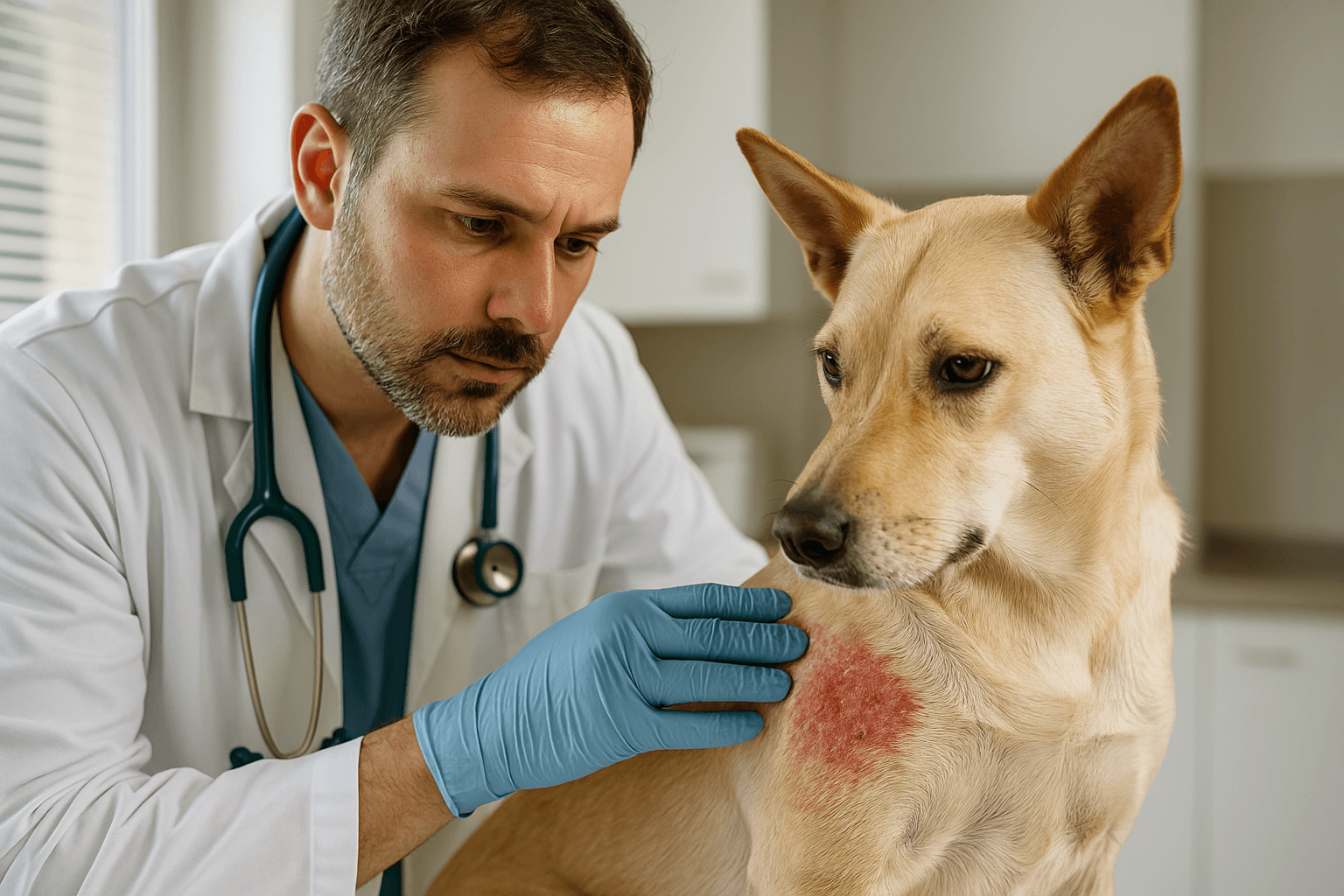
Dog skin problems are among the most common reasons pet owners visit the veterinarian. From constant itching to red rashes, hair loss, bumps, dandruff, and seasonal allergies, skin issues can cause severe discomfort for your pet. This updated 2025 guide is written by a veterinarian to help dog owners understand the causes of dog skin problems, identify symptoms early, and choose the safest and most effective dog allergy treatments.
This guide also includes internal links to essential pet care resources such as the Puppy Feeding Guide, Dog Vaccination Schedule 2025, and the Pet Health Myth-Busting Guide to support overall health.
What Are the Most Common Dog Skin Problems?
There are more than 20 possible causes of dog skin problems, but the most common include:
- Dog skin allergies (environmental, food, flea)
- Flea and tick infestation
- Bacterial dermatitis (pyoderma)
- Hot spots (acute moist dermatitis)
- Fungal infections (ringworm, yeast)
- Dry skin and dandruff
- Mange (demodectic or sarcoptic)
- Hormonal disorders (hypothyroidism, Cushing’s)
Among these, dog skin allergies are the most frequent reason for vet appointments in 2023–2025. Allergy-related dog itching treatment has become a necessary routine for millions of pet owners worldwide.
1. Dog Skin Allergies (Atopic Dermatitis)
Dog skin allergies occur when the immune system reacts excessively to triggers such as dust, grass, pollen, mold, or household chemicals. Certain breeds like Labradors, Poodles, German Shepherds, and Bulldogs are more prone.
Symptoms of Dog Skin Allergies:
- Constant scratching or licking
- Redness on paws, belly, and ears
- Hair thinning or bald patches
- Greasy, smelly skin
- Darkening or thickening of skin (chronic allergy)
Best Treatment Options:
- Veterinary antihistamines
- Prescription allergy medications (Apoquel, Cytopoint)
- Medicated anti-itch shampoos
- Omega-3 supplements
- Identifying and avoiding allergens
Dogs with allergies often require long-term management rather than a one-time cure. Early and accurate diagnosis dramatically improves results.
2. Food Allergies & Sensitive Stomachs
Dog food allergies are commonly triggered by chicken, beef, wheat, soy, egg, or dairy. Many dogs show symptoms through their skin instead of digestive issues. That’s why food allergies are often mistaken for environmental allergies.
Symptoms of Food-Related Dog Skin Problems:
- Red itchy skin on belly and paws
- Recurrent ear infections
- Year-round itching
- Anal gland irritation (scooting)
Best Treatment Options:
- Vet-guided elimination diet (8–12 weeks)
- Switching to hydrolyzed or hypoallergenic diets
- Omega fatty acid supplementation
- Avoiding artificial colors and fillers
Learn more about proper feeding through the Complete Puppy Feeding Guide & Schedule.
3. Fleas, Ticks & Parasites
One of the fastest ways for dogs to develop dog skin problems is through fleas, ticks, and mites. Even a single flea bite can trigger flea allergy dermatitis, a severe allergic reaction.
Symptoms:
- Intense scratching behind the tail
- Black flea dirt on skin
- Red bumps or scabs
- Hair loss around tail and lower back
Treatment:
- Monthly anti-parasitic medication (topical or oral)
- Medicated anti-itch shampoo
- Environmental cleaning (wash bedding weekly)
- Vacuuming carpets & furniture
For complete parasite prevention, read our Parasite Control Guide.
4. Bacterial Skin Infections (Pyoderma)
Bacterial infections occur secondary to scratching, immune disease, or allergies. Dogs with dog skin allergies have a higher risk because damaged skin invites bacteria to multiply.
Signs:
- Pustules or pimples
- Red, inflamed skin
- Crusty or scaly patches
- Foul odor
- Hair loss
Treatment:
- Veterinary antibiotics
- Medicated shampoo (chlorhexidine)
- Anti-inflammatory therapy
5. Hot Spots (Acute Moist Dermatitis)
Hot spots are painful, rapidly spreading infections caused by excessive licking or scratching. They develop within hours.
Symptoms:
- Red, moist, swollen sores
- Strong odor
- Dog cries or growls when touched
Treatment:
- Shave area for ventilation
- Topical antibiotics
- Anti-inflammatory medication
- E-collar to prevent licking
6. Fungal Infections (Yeast & Ringworm)
Fungal overgrowth causes greasy, smelly skin and ear infections. Ringworm, on the other hand, is a contagious fungal disease affecting humans and pets.
Symptoms:
- Musty odor
- Red, scaly patches
- Brown waxy ears
- Thickened skin
Treatment:
- Oral antifungals
- Medicated antifungal shampoo
- Ear drops for yeast infections
7. Mange (Sarcoptic and Demodectic)
Mange is caused by microscopic mites that burrow into the skin, causing severe itching, crusting, and hair loss.
Symptoms of Mange:
- Extreme itching
- Patchy hair loss
- Thick crusts on ears and elbows
- Red, inflamed skin
Treatment:
- Prescription anti-mite medication
- Medicated dips
- Long-term immune support
8. Hormonal Disorders Causing Skin Problems
Conditions like hypothyroidism and Cushing’s disease often present with chronic dog skin problems.
Signs:
- Hair thinning or coat dullness
- Recurrent infections
- Blackened skin
- Weight gain (hypothyroidism)
- Increased thirst & urination (Cushing’s)
Treatment:
- Hormone testing
- Prescription medication
- Long-term monitoring
Best Daily Care Routine for Dogs with Skin Problems
Managing dog skin allergies requires consistent care:
- Bathe weekly with medicated shampoo
- Use hypoallergenic wipes after walks
- Provide high-quality omega-3 supplements
- Choose grain-free or hypoallergenic diets if allergic
- Vacuum home weekly to reduce allergens
Regular preventive care is essential. For complete vaccination protection, follow the Dog Vaccination Schedule 2025.
When Is It an Emergency?
Dog skin problems require emergency care if:
- Your dog cries when touched
- There is bleeding, pus, or swelling
- Your dog stops eating
- There is rapid spreading of sores
- Your dog becomes lethargic
For emergency guidance, visit our Dog Emergency First Aid Section.
Final Advice from a Veterinarian
Dog skin problems can be challenging, but with early diagnosis and proper dog itching treatment, your pet can live comfortably without chronic irritation. Allergies, parasites, infections, and hormones all play major roles. If symptoms persist longer than 48 hours, consult your veterinarian immediately.
Healthy skin means a healthy, happy dog — and with the right care routine, most dogs recover quickly.







I found it interesting that allergies are such a common cause for skin issues in dogs. It makes me realize how important it is to address itching early on to avoid more severe problems down the road. Have you seen an increase in cases of food allergies affecting dogs recently?