Why Does My Dog Eat Poop? Coprophagia Causes & Treatment
Coprophagia, the eating of feces, is one of the most common questions veterinarians hear, and one of the most distressing habits for owners to witness. This guide explains why it happens, when it’s genuinely normal versus a sign of an underlying problem, the real health risks involved, and what actually works to stop it.
Why does my dog eat poop: when Coprophagia Is Genuinely Normal
Nursing mother dogs routinely eat their puppies’ feces during the first several weeks of life, an instinctive behavior that keeps the den clean and free of scent cues that could attract predators in a wild setting. This is entirely normal and not a cause for concern. Young puppies also explore the world largely through their mouths and may investigate or sample feces simply out of curiosity or imitation of their mother, particularly in multi-dog households where they observe other dogs. Many puppies naturally outgrow this exploratory phase as they mature, though not universally, which is part of why persistent coprophagia into adulthood deserves a closer look rather than assuming it will simply resolve with age.
Why does my dog eat poop: possible Causes in Adult Dogs
Nutritional deficiency or malabsorption. A dog whose diet is lacking adequate nutrients, or who isn’t properly absorbing them due to an underlying digestive issue, may seek to “recycle” nutrients from stool, sometimes their own, sometimes another animal’s.
Intestinal parasites. Parasites competing for nutrients within the gut can drive this same nutrient-seeking behavior, and a parasite check is a standard, sensible early step in investigating persistent coprophagia.
Underlying medical conditions. Diseases that increase appetite or affect digestion, including diabetes, Cushing’s disease, and exocrine pancreatic insufficiency, are all recognized potential contributors, which is why persistent, new-onset coprophagia genuinely deserves a proper veterinary workup rather than being dismissed as purely behavioral.
Boredom or anxiety. Dogs left alone for long periods, or lacking adequate mental stimulation, sometimes develop this behavior as an outlet, similar to other stress-related habits.
Learned behavior from punishment. A dog previously scolded harshly for house-soiling accidents may learn to “remove the evidence” by eating it, an unintended consequence of punishment-based house-training approaches.
Attention-seeking. Some dogs learn that this behavior reliably gets a strong owner reaction, even a negative one, which can inadvertently reinforce the habit in attention-motivated dogs.
| Age/pattern | Likely explanation | Action |
|---|---|---|
| Nursing mother | Normal instinctive den-cleaning behavior | No action needed |
| Young puppy, occasional | Exploration, mimicry; often outgrown | Monitor, supervise, redirect |
| Adult dog, new onset | Possible medical cause, parasites, or new stressor | Veterinary workup recommended |
| Adult dog, longstanding, otherwise healthy | Often behavioral/learned | Behavioral management, environmental control |
Why This Isn’t Just an Unpleasant Habit
Beyond the obvious “gross factor,” coprophagia carries genuine health risks worth taking seriously. Intestinal parasites, including roundworms, whipworms, and hookworms, can be transmitted through contact with infected feces, meaning a dog eating another animal’s stool, particularly from an unknown or untreated animal, faces real infection risk. Certain infectious diseases can also potentially spread this way. This is exactly why addressing coprophagia isn’t purely about the unpleasantness for owners; it’s a genuine preventive health measure, particularly relevant for dogs who roam areas with unknown animals’ waste, like parks or shared yards.
Managing and Reducing Coprophagia
Eating Other Animals’ Feces: A Different Category
It’s worth distinguishing between a dog eating their own stool and a dog seeking out other animals’ feces specifically, since these can reflect different underlying drives. Cat feces, in particular, draws many dogs due to its relatively high protein and fat content from cat food, making it genuinely appealing on a purely nutritional level rather than reflecting any deficiency in the dog’s own diet. This is one of the more common, almost universal coprophagia patterns in households with both cats and dogs, and simple environmental management, keeping the litter box in a dog-inaccessible location, resolves it far more reliably than any training or product-based approach. Herbivore feces, from horses, rabbits, or similar animals, can also attract dogs due to residual plant nutrients, and while generally lower risk than carnivore feces in terms of parasite transmission, supervision around these sources during walks remains a sensible precaution.
When to Consider Professional Behavioral Help
For coprophagia that persists despite ruling out medical causes and trying consistent environmental and training interventions, consulting a veterinary behaviorist or a certified professional dog trainer experienced with this specific issue can provide a more structured, individualized approach than general advice alone. These professionals can assess your specific dog’s motivation more precisely, whether primarily compulsive, anxiety-driven, or habit-based, and tailor a behavior modification plan accordingly. This step is particularly worth considering if the behavior is severe, resistant to typical interventions, or causing genuine distress within the household, since a persistent, well-established habit sometimes needs more targeted intervention than generic advice can offer.
A Closing Thought
Coprophagia is genuinely one of the more common, and more misunderstood, behaviors owners bring up with their veterinarian, often with real embarrassment. There’s no need for that; it’s a well-recognized issue with real, addressable causes, and taking it seriously, rather than either ignoring it or reacting with frustration, is what actually leads to lasting improvement.
What a Veterinary Visit for Coprophagia Actually Involves
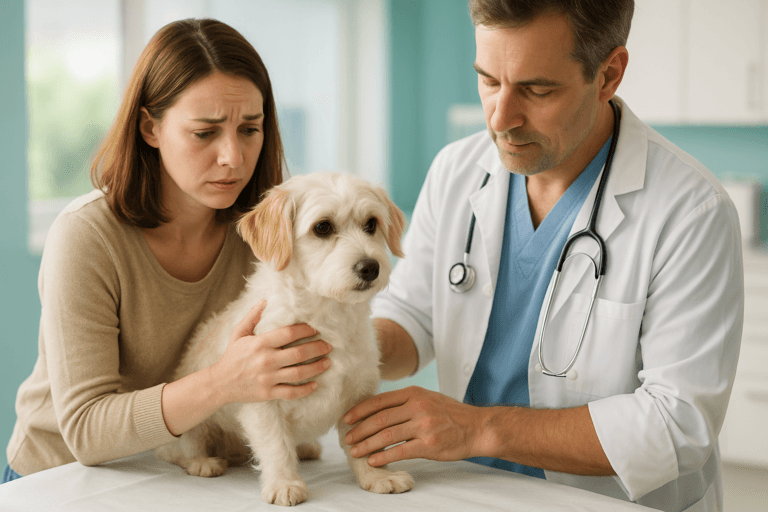
Knowing what to expect helps make the appointment more productive. Your veterinarian will typically ask detailed questions: how long the behavior has been occurring, whether it’s new or longstanding, whether your dog eats their own stool or seeks out other animals’ feces, current diet and any recent changes, and whether any other symptoms have appeared alongside it. A physical exam checks for signs of underlying illness, and a fresh fecal sample is usually requested to screen for parasites. Depending on findings, bloodwork may be recommended, particularly for adult dogs with new-onset coprophagia, to screen for conditions like diabetes, Cushing’s disease, or pancreatic insufficiency that can present with increased appetite or altered digestion. Bringing a brief written history of when the behavior occurs, indoors versus outdoors, alone versus with other dogs present, time of day, can give your veterinarian genuinely useful pattern information beyond what’s easy to recall verbally during a single appointment.
The Role of Diet Quality
While coprophagia has many possible causes, diet quality deserves specific attention as a genuinely modifiable factor. Highly digestible, complete and balanced commercial diets formulated to current nutritional standards leave less undigested material in stool, which some researchers believe may reduce the appeal of feces to dogs seeking additional nutrients. Poor quality diets, inconsistent feeding schedules, or diets not properly matched to a dog’s life stage and activity level can all contribute to nutritional gaps that drive this nutrient-seeking behavior. If your dog’s diet hasn’t been reviewed by a veterinarian recently, particularly if coprophagia has developed alongside any diet change, this is a reasonable, concrete area to investigate and discuss at your next visit, since a straightforward diet adjustment sometimes resolves the behavior when other causes have been ruled out.
A Note for Multi-Dog Households
In homes with multiple dogs, coprophagia can sometimes spread as a learned behavior, with one dog picking up the habit through observing another. Addressing the behavior in the original dog, while also supervising and cleaning up promptly for the whole group, helps prevent it from becoming an entrenched household pattern rather than an isolated individual habit.
Patience Is Part of the Process
Behavioral change, unlike a course of antibiotics, rarely resolves overnight. Most successful coprophagia interventions take several weeks of consistent effort before meaningful improvement is visible, and expecting immediate results often leads owners to abandon an approach that would have worked with a bit more time and consistency.
Frequently Asked Questions
Is it dangerous for my dog to eat their own poop?
It’s generally lower risk than eating another animal’s feces, though it’s still worth addressing, both for the underlying reasons behind it and because it isn’t a habit worth simply accepting without investigation.
Will my puppy outgrow this on their own?
Many puppies do reduce or stop this behavior as they mature, though not all do, so ongoing supervision and gentle redirection during the puppy phase remains a reasonable approach.
Do taste-aversion products actually work?
Results vary by individual dog; some respond well, while others aren’t deterred, and these products work best combined with addressing any underlying medical or environmental factors rather than used alone.
Can coprophagia be a sign of a serious illness?
It can be linked to certain underlying medical conditions, which is why new or persistent coprophagia in an adult dog deserves veterinary evaluation rather than being assumed purely behavioral.
By Dr. Zahid Afzal, DVM — General Veterinary Hospital, Lahore. This article is for general education and does not replace a full physical examination or personalized guidance from your own veterinarian.