

By Dr. Zahid Afzal, DVM – General Veterinary Hospital, Lahore
Cats are masters at hiding pain. In the clinic, I routinely see cats with severe dental disease, advanced arthritis or internal illness whose families say, “But he seemed fine until yesterday.” In reality, the cat was uncomfortable for weeks or months – just very quiet about it.
In nature, showing weakness can make an animal a target. That survival instinct is still strong in our indoor companions. That’s why understanding the subtle signs of pain in cats is one of the most important parts of being a responsible cat parent.
In this guide, we’ll walk through:
- Why cats hide pain so well
- Early behaviour changes that often come before obvious limping or crying
- Subtle physical signs in the eyes, face and body
- When “just watching” is dangerous
- How vets actually assess feline pain in the clinic
- What treatment options exist – from home adjustments to advanced pain control
You’ll also find links to deeper guides on related topics such as vomiting, behaviour changes and when to book an urgent vet visit on our main vet-approved pet health site Vet & Pet Health Guide.

Cats hiding pain: Why do cats hide pain?
From an evolutionary point of view, cats are both predators and potential prey. A cat that limps, cries or appears weak could be pushed away from food, attacked by another animal or lose its territory. Over thousands of years, cats that were quiet and stoic had a better chance of survival and passed on those instincts.
That survival strategy still shows up in our homes:
- Many painful cats continue to jump, eat and groom – just less than normal.
- Some cats don’t vocalise at all, even with serious injuries.
- Others become more affectionate or more withdrawn instead of obviously “sick”.
As a result, pain in cats is more like a pattern of small changes than one dramatic symptom. The better you know your cat’s normal routine, the easier it is to notice something is off.
Cats hiding pain: Subtle behaviour changes that can signal pain
Behaviour is often the first place pain appears. Think of these as quiet warning lights rather than “drama” symptoms.
Cats hiding pain: Changes in activity level
- Sleeping more than usual, especially in the day.
- Playing less with toys, other pets or people.
- Staring out of the window instead of exploring.
- Stopping mid-jump or hesitating before jumping to favourite places.
Changes in mobility and grooming
- Taking longer to go up or down stairs.
- Using new routes around the home that avoid jumping.
- Grooming less, especially around the lower back or hind legs.
- Overgrooming one area, causing hair thinning or skin irritation.
Changes in mood and interaction
- Hiding under the bed or in cupboards more often.
- Avoiding being picked up when they previously tolerated it.
- Becoming grumpy or hissing when touched in specific spots.
- Becoming unusually clingy and vocal with their favourite person.
If you notice two or more of these changes lasting more than a few days, it’s time to start thinking “Could my cat be in pain?” rather than assuming they are just moody.
Cats hiding pain: Eye and facial signs of pain in cats
Veterinary teams often use a feline grimace scale to assess pain. It looks at the position of the ears, eyes, whiskers and muzzle.
Common facial signs include:
- Eyes more squinted than usual, or “half-shut”.
- A furrowed brow or tension between the eyes.
- Ears held slightly to the side or flattened back.
- Whiskers pulled backwards tight against the face.
- Cheeks and nose looking tense instead of soft.
These changes can be very subtle. A good trick is to compare an older photo of your relaxed cat with how they look now. If the expression seems consistently tighter, that’s a clue.
Cats hiding pain: Body posture and movement
A painful cat often changes how they hold their body, even when they are trying to rest.
Postures that worry vets include:
- Curled into a tight ball with head tucked and paws under body.
- Sitting hunched with shoulders raised and back rounded.
- Lying with the front half of the body up and the back end tucked under.
- Constantly shifting position as if they can’t get comfortable.
You may also notice:
- Reluctance to jump onto beds, sofas or window ledges.
- Hesitation before using the litter tray, especially with high sides.
- Stiffness after waking up, which may improve slightly with movement.
Cats hiding pain: Subtle litter tray and hygiene changes
For many cats, the litter tray is where pain shows up first, especially with arthritis or abdominal discomfort.
Warning signs include:
- Standing with front paws inside the tray and back paws outside.
- Perching on the edge of the tray rather than fully stepping in.
- Passing smaller or harder stools because it is painful to posture.
- Urinating just beside the tray instead of inside it.
- Struggling to bury urine or faeces as they normally do.
Pain can also affect grooming:
- Greasy fur along the spine and back legs because the cat can’t twist easily.
- Matted fur in long-haired cats, especially around hips and lower back.
- Stronger odour from the coat because grooming time has dropped.
Cats hiding pain: “Sudden” aggression or change in temperament
Many families report that their “sweet” cat suddenly started:
- Growling when picked up.
- Biting when brushed along the lower back.
- Swatting when another pet jumps near them.
- Avoiding children or visitors they previously tolerated.
In many of these cases, the cat is not “naughty” – they are protecting a painful area. The bite or swat is their last warning after subtle signs were missed.
If your cat has become more reactive, especially to touch along the spine, hips or abdomen, it’s worth arranging a vet check rather than assuming it is just behaviour. In some cases, behaviour changes and physical pain are mixed, so your vet may look at both together.
Cats hiding pain: When mild signs become an emergency
Some pain can be monitored for 24–48 hours while you arrange a vet visit. Other signs mean “go to a vet now.” For example, you should seek urgent help very quickly if your cat has:
- Sudden severe lameness or inability to use one or more legs.
- Open wounds, obvious fractures or heavy bleeding.
- Repeated vomiting, especially with lethargy or a painful belly. (For more detail on vomiting and home care steps, see our guide: Home Treatment for Cat Vomiting – Vet Online Guide .)
- Straining in the litter tray with little or no urine produced.
- Painful crying, open-mouth breathing or rapid breathing at rest.
If you’re unsure whether something is an emergency, it’s safer to call your local veterinarian or an emergency clinic and describe exactly what you see. Some clinics, including General Veterinary Hospital, Lahore, also offer phone or online vet consultation so you don’t lose time deciding.
How vets assess pain in cats
In the clinic, we don’t rely on one sign. Instead, we put together:
- Your description of behaviour changes at home.
- Observation of posture and movement in the exam room.
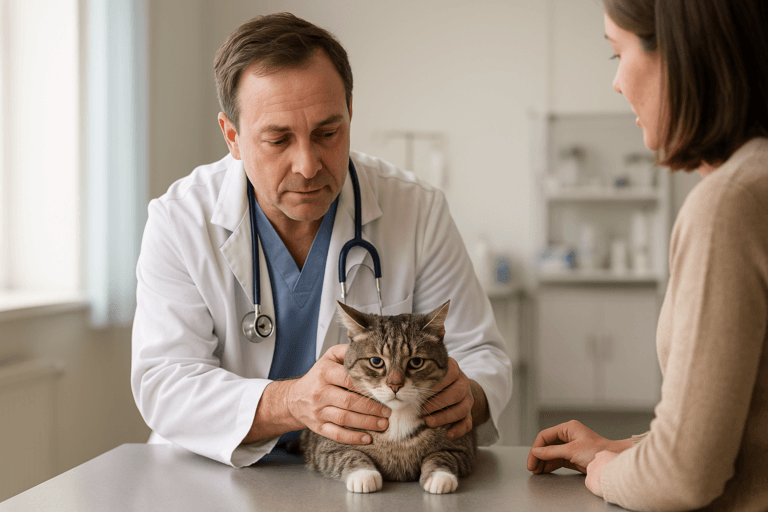
- Palpation (gentle pressure) of joints, spine and abdomen.
- Dental examination to check for broken teeth, resorptive lesions and gum disease.
- Vital signs such as heart rate, breathing rate and temperature.
We may also recommend further tests such as blood work, X-rays or ultrasound to look for hidden causes of pain like arthritis, pancreatitis, urinary problems or internal disease.
For example, if your cat is painful, quiet and vomiting, we might suspect something more complex than a hairball and refer you to imaging or hospital care. That’s why vomiting, appetite loss and pain often need a full vet visit rather than home treatment alone.
Common causes of chronic pain in cats
Every cat is different, but some painful conditions are especially common:
Arthritis and joint pain
- Very common in middle-aged and older cats.
- Often shows as reluctance to jump, stiffness or overgrown claws from less scratching.
- Can cause grumpiness, hiding or using the litter tray differently.
Dental disease
- Fractured teeth, resorptive lesions and severe gingivitis are all painful.
- Many cats continue eating but only on one side of the mouth.
- Drooling, bad breath and food dropping from the mouth can appear late.
Soft-tissue injuries
- Sprains, muscle strains and bruises after a fall or rough play.
- May cause a subtle limp, reluctance to jump or localised flinching on touch.
Internal disease
- Pancreatitis, inflammatory bowel disease, urinary problems and some cancers can all cause internal pain.
- Signs are often vague: hiding, reduced appetite, vomiting, weight loss or just “not himself”.
Because these problems can overlap, it’s rare that we can diagnose based on one symptom alone. That’s another reason exam and tests are so important.
Some systemic illnesses, such as infections linked with poor hygiene or litter management, may also be connected with zoonotic risks. If you are pregnant or planning pregnancy and worried about risks such as toxoplasmosis, you can read our detailed guide: Can Cats Cause Infertility in Women? The Viral Claim Explained .
What you can do at home if you suspect pain
You should never give human painkillers like paracetamol (acetaminophen), ibuprofen or diclofenac to cats. Many of these are toxic even in small doses.
Safe steps you can take while waiting for your vet visit include:
- Providing low, easy-access resting spots instead of only high shelves.
- Using a litter tray with lower sides for older or stiff cats.
- Offering soft, shallow food and water bowls at head height.
- Keeping floors dry and non-slippery.
- Minimising rough play with other pets or children.
You can also keep a short diary of:
- Which times of day your cat seems most uncomfortable.
- Which activities cause flinching or reluctance.
- Any changes in appetite, water intake or stools.
Bring this diary to your vet appointment – it is incredibly helpful for diagnosis and for tracking improvement once treatment starts.
How vets treat pain in cats
Once we identify the likely cause of pain, treatment may include:
- Anti-inflammatory pain relief medicines specifically licensed for cats.
- Additional analgesics such as certain opioids or nerve-targeting drugs when appropriate.
- Joint supplements, omega-3 oils and weight management for arthritis.
- Dental procedures under general anaesthesia to remove painful teeth.
- Treatment of underlying disease such as infection, pancreatitis or urinary blockage.
- Environmental changes at home, including ramps, soft bedding and raised bowls.
In some countries there are also newer long-acting injectable pain relief options for arthritis that can greatly improve mobility and quality of life for senior cats.
For general health planning and nutrition ideas (especially if you also live with dogs), you can explore our puppy feeding guide: Complete Puppy Feeding Guide – Portions, Schedule & Tips and our dog vaccine schedule: Dog Vaccination Schedule 2025 .
When to ask for a pain-management plan
If you live with an older cat and notice:
- They no longer jump to favourite places.
- Their claws are getting long and catching in fabrics.
- They spend most of the day sleeping in one spot.
- They groom less or avoid being brushed along the back.
…it is worth actively asking your vet about arthritis and long-term pain management. Many families assume these are “just old age” when in reality the cat is uncomfortable and could be helped.
You can also ask whether your clinic offers remote follow-up or online vet consultation. Some issues can be monitored with videos of your cat walking, jumping and using the litter tray, especially after treatment has started.
When online advice is not enough
Online articles and symptom tools are useful for learning patterns and red flags, but they cannot:
- Examine your cat’s joints, spine or abdomen.
- Look inside the mouth properly.
- Run blood tests, urine tests or imaging.
- Provide prescription-only pain relief legally.
Use online information as a guide to “Is this worth a vet visit?” – not as a substitute. If your instincts say your cat is not right, you’re usually correct.
Conclusion: Knowing your cat’s normal is your superpower
The single best way to catch pain early is to know your own cat’s normal habits:
- Where they like to sleep.
- How they jump and land.
- How much they groom and play.
- How they greet you when you come home.
When those patterns change and the change persists, it’s time to think about pain – even if your cat is not crying or limping. Trust your observations and work with your veterinarian to investigate.
With attentive owners, modern pain relief and a bit of environmental adjustment, many painful cats can return to a much more comfortable, active and happy life. And if you are ever unsure whether to worry, it is always safer to call your vet or an emergency clinic than to wait and hope. Early action often means simpler treatment, lower cost and a much better outcome for your cat.




This is such an important point! My cat has had a few minor ‘off’ days, and I’ve brushed it off thinking it was just a quirky mood. After reading this, I realize it could be something more serious, especially with dental issues.