
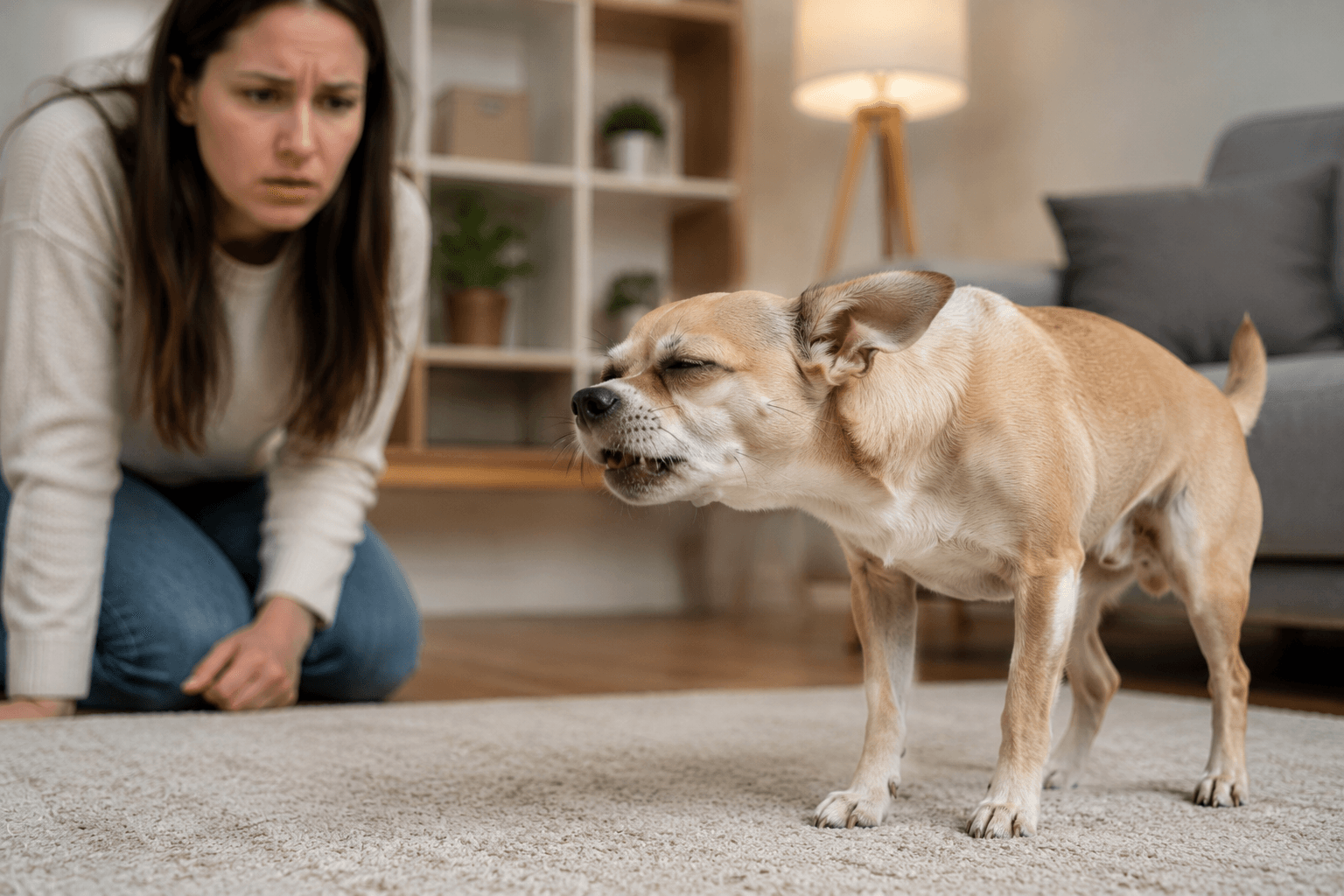
Quick Answer: Dog reverse sneezing is a sudden snorting, choking-like, or honking sound caused by rapid inward breathing through the nose. It often looks scary but is usually short and harmless. However, frequent reverse sneezing, episodes with coughing, breathing difficulty, blue gums, collapse, nasal discharge, or sudden worsening should be checked by a veterinarian.
Dog reverse sneezing is one of those sounds that can make any owner panic. A dog may suddenly stop, stretch the neck, pull air in forcefully, and make a loud snorting or choking-like noise. Many owners think their dog is choking, coughing, having asthma, or unable to breathe. In many cases, dog reverse sneezing is not dangerous and stops within a short time. But repeated or severe dog reverse sneezing can also point toward irritation, allergy, nasal mites, foreign material, infection, soft palate issues, or another airway problem.
At General Veterinary Hospital Lahore, owners often show videos and say, “Doctor, mera dog achanak ajeeb snorting sound karta hai, jaise saans phas rahi ho.” In many dogs, the episode is a classic reverse sneeze, especially when the dog is normal immediately afterward. But sometimes the video reveals coughing, gagging, tracheal collapse-like honking, nasal discharge, or true breathing distress. That difference matters.
This guide explains what reverse sneezing sounds like, why it happens, how to tell it apart from choking or coughing, what you can do safely at home, and when your dog should be examined by a veterinarian.
What Is Reverse Sneezing in Dogs?
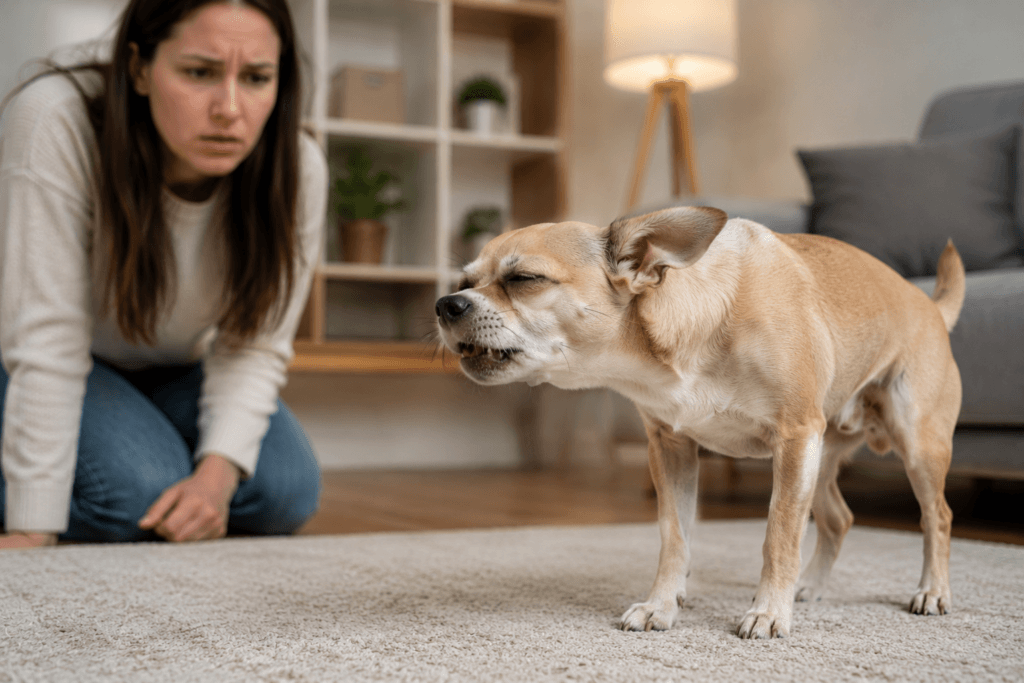
Reverse sneezing is a sudden spasm or irritation involving the nose, throat, or soft palate area. Instead of pushing air out like a normal sneeze, the dog pulls air inward quickly and forcefully. This creates a strange snorting, grunting, or honking sound.
During an episode, your dog may:
- Stand still suddenly
- Stretch the neck forward
- Pull the lips slightly back
- Make repeated snorting sounds
- Look tense or worried
- Return to normal after the episode stops
The sound is often much scarier than the condition itself. A typical reverse sneeze lasts a few seconds to less than a minute. Afterward, the dog usually acts normal, eats, drinks, plays, and breathes comfortably.
Reverse Sneezing vs Normal Sneezing
Why Does Reverse Sneezing Happen?
Reverse sneezing usually happens when something irritates the back of the throat, soft palate, nose, or upper airway. The body reacts with a sudden reflex, causing the dog to pull air inward repeatedly.
Think of reverse sneezing as the dog’s body trying to clear irritation from the upper airway. It looks dramatic, but many dogs recover quickly and behave normally right after.
Common Causes of Dog Reverse Sneezing
Dust, smoke, perfumes, sprays, strong odors
Pollen, grass, seasonal allergies, house dust
Soft palate issues, flat-faced breeds, narrow airways
Frequent episodes, discharge, cough, distress
1. Dust, Smoke, Perfumes and Household Sprays
Strong smells and airborne irritants are common triggers. Dogs may reverse sneeze after exposure to floor cleaners, room sprays, perfumes, incense, cigarette smoke, mosquito sprays, aerosol products, or dust from sweeping.
At General Veterinary Hospital Lahore, this is common in indoor dogs. Owners may notice episodes after cleaning the house, applying perfume, spraying insect repellent, or using strong disinfectants. The dog’s airway reacts before the owner realizes the smell is irritating.
Simple prevention includes keeping dogs away during cleaning, avoiding strong sprays near pets, improving ventilation, and using pet-safe cleaning routines.
2. Pollen, Grass and Seasonal Allergy
Some dogs reverse sneeze more during pollen seasons or after outdoor walks. Grass seeds, pollen, dust, and outdoor particles can irritate the nose and throat. This may be more noticeable after sniffing grass, rolling outdoors, or walking in dusty areas.
Allergy-related dogs may also show:
- Itchy skin
- Paw licking
- Watery eyes
- Ear irritation
- Repeated sneezing
If your dog also has skin itching or paw licking, the guide on dog skin problems and allergies explains how allergies affect dogs beyond the nose.
3. Excitement, Pulling on Leash or Eating Quickly
Some dogs reverse sneeze when they become excited, pull strongly on a leash, drink quickly, eat too fast, or suddenly inhale after activity. Pressure around the throat or sudden airway irritation can trigger a short episode.
Using a harness instead of a tight collar may help dogs that reverse sneeze during walks. Slower feeding can help dogs that trigger episodes around meals.
4. Flat-Faced Breeds and Soft Palate Issues
Flat-faced breeds such as Pugs, Bulldogs, Shih Tzus, Boston Terriers, and some small toy breeds may be more prone to airway noises. Their airway structure can make breathing sounds more noticeable, especially with excitement, heat, stress, or soft palate irritation.
Reverse sneezing in these breeds may still be harmless, but owners must be more careful. If a flat-faced dog has noisy breathing, heat intolerance, blue gums, fainting, or exercise difficulty, it is not just a simple reverse sneeze.
5. Nasal Irritation or Foreign Material
Sometimes a small particle, grass piece, seed, dust clump, or irritant can enter the nose or throat area. This can trigger repeated reverse sneezing. If the episode happens once and disappears, it may be minor. But if reverse sneezing starts suddenly and keeps happening, a foreign material should be considered.
Warning signs may include:
- Sudden repeated episodes
- Pawing at the nose
- One-sided nasal discharge
- Sneezing along with reverse sneezing
- Blood from the nose
These cases need veterinary examination because the irritant may not come out on its own.
6. Nasal Mites or Infection
Nasal mites are less commonly recognized by owners, but they can irritate the nasal passages and cause sneezing, reverse sneezing, nasal discharge, or discomfort. Respiratory infections can also cause airway irritation and abnormal sounds.
If your dog has reverse sneezing plus nasal discharge, coughing, fever, reduced appetite, or tiredness, it should not be treated as a harmless reflex only.
7. Kennel Cough and Other Respiratory Disease
Some owners confuse reverse sneezing with coughing. Kennel cough often causes a dry hacking cough, gagging, or retching sound. Reverse sneezing is more like repeated inward snorting through the nose.
If your dog recently visited a kennel, grooming center, park, clinic, or was exposed to coughing dogs, respiratory infection becomes more possible. The guide on kennel cough in dogs explains cough signs, prevention, and when to seek treatment.
Reverse Sneezing vs Choking: How to Tell the Difference
This is one of the most important sections for owners. Reverse sneezing can look like choking, but choking is much more dangerous.
For true emergency situations, the guide on emergency first aid for dogs and cats can help owners understand urgent warning signs.
Reverse Sneezing vs Tracheal Collapse
Tracheal collapse is a different condition that can cause a goose-honk cough, especially in small breeds. Reverse sneezing is usually a short inward snorting episode. Tracheal collapse often causes coughing, exercise intolerance, worsening with excitement, and repeated honking coughs.
Small breeds such as Pomeranians, Yorkshire Terriers, Chihuahuas, and Toy Poodles may be more prone to tracheal collapse. If your dog has frequent honking cough, trouble breathing, fainting, or worsening signs, a veterinary check is important.
Reverse Sneezing vs Coughing
Coughing usually pushes air outward. Reverse sneezing pulls air inward. Coughing may be linked to kennel cough, heart disease, bronchitis, tracheal collapse, pneumonia, or airway disease. Reverse sneezing usually comes from upper airway irritation.
If you are unsure, record a video. At General Veterinary Hospital Lahore, videos often make the difference between identifying reverse sneezing, coughing, gagging, or breathing distress.
When Dog Reverse Sneezing Is Usually Not Dangerous
Reverse sneezing is usually less concerning when:
- The episode is short
- Your dog stays alert
- Gums remain pink
- Breathing is normal afterward
- Your dog eats and plays normally
- Episodes happen rarely
- There is no nasal discharge, cough, weakness, or fever
In these cases, owners can monitor and reduce known triggers like dust, smoke, sprays, excitement, or tight collars.
When Reverse Sneezing Needs a Vet Check
What You Can Do During a Reverse Sneezing Episode
Most dogs do not need aggressive help during a reverse sneeze. Stay calm and avoid panic. Stress can make the episode feel worse for both the owner and the dog.
Safe steps include:
- Speak calmly
- Gently stroke the neck or chest
- Move the dog away from smoke, perfume, dust, or sprays
- Offer water after the episode ends
- Use a harness instead of a tight collar for dogs triggered on walks
- Record a video if episodes repeat
Some dogs improve after swallowing, so calmly encouraging the dog to lick or swallow may help. Do not force water during the episode. Do not block the mouth. Do not shake the dog or panic.
What Not to Do
- Do not panic and shout
- Do not put fingers deep into the mouth unless true choking is obvious
- Do not give human cough syrup
- Do not use random antibiotics
- Do not spray perfume, steam, or strong oils near the dog
- Do not ignore frequent worsening episodes
Many dogs with simple reverse sneezing do not need medicine. But dogs with infection, mites, allergy, foreign material, or airway disease need proper diagnosis rather than random treatment.
How Veterinarians Diagnose Reverse Sneezing
Diagnosis begins with history and observation. Your veterinarian may ask when the episode happens, how long it lasts, whether it occurs after walks or cleaning, whether there is coughing or nasal discharge, and whether the dog is normal afterward.
Veterinary assessment may include:
- Physical examination
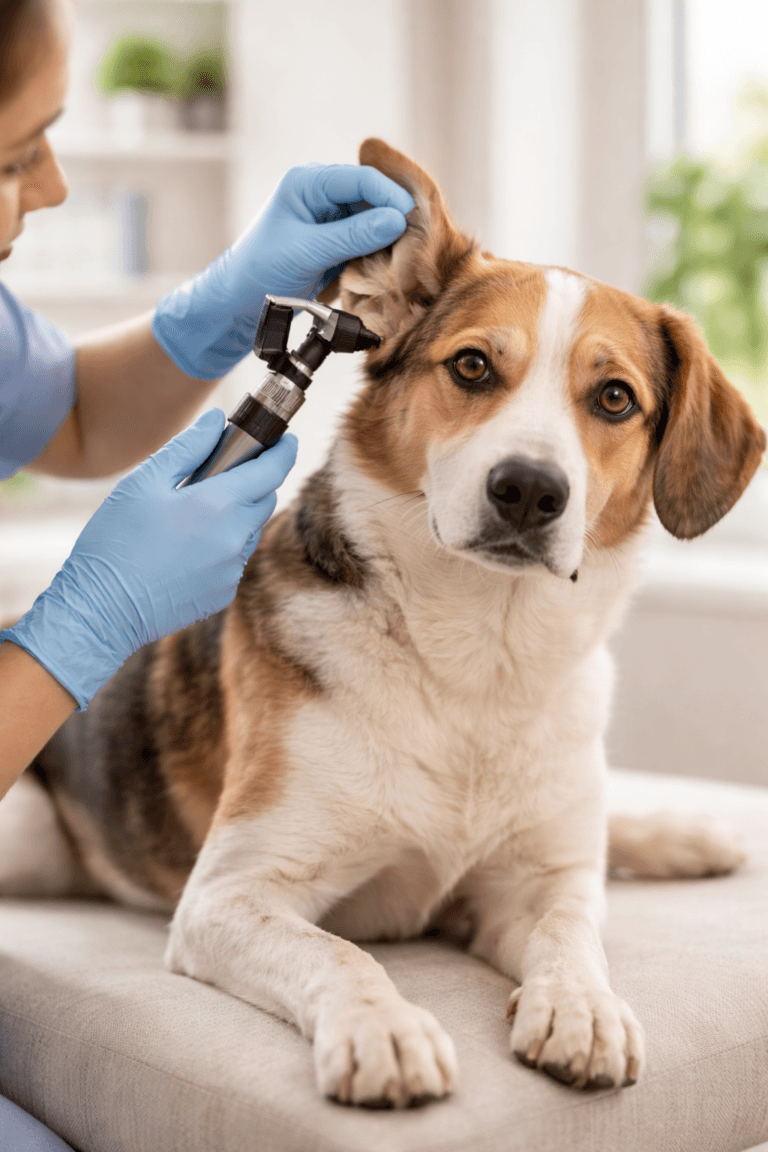
- Checking nose, throat, mouth, and soft palate
- Listening to heart and lungs
- Checking for nasal discharge or allergy signs
- Reviewing videos from home
- Further testing if episodes are severe, frequent, or unusual
In simple cases, no advanced testing is needed. In difficult cases, the veterinarian may investigate allergies, nasal mites, foreign material, masses, elongated soft palate, tracheal issues, or respiratory disease.
How Dog Reverse Sneezing Is Treated
Treatment depends on the cause. Many dogs need no treatment if episodes are rare and mild. When a trigger is identified, reducing exposure may be enough.
Dog reverse sneezing: Allergy-related reverse sneezing
Allergy management may include reducing dust, pollen exposure, smoke, sprays, and strong odors. Some dogs may need veterinary-prescribed allergy treatment.
Nasal mites or parasites
If mites are suspected, your veterinarian may prescribe appropriate treatment. Do not use random parasite medicine without guidance.
Foreign material
If a seed, grass piece, or object is suspected in the nasal passage, the dog may need examination and removal under proper veterinary care.
Soft palate or airway structure
Flat-faced dogs or dogs with airway structure problems may need more detailed assessment, especially if breathing signs are frequent or severe.
Respiratory infection
If coughing, fever, nasal discharge, or lethargy is present, treatment may be needed for infection or inflammation.
How to Prevent Reverse Sneezing Episodes
You may not prevent every episode, but you can reduce common triggers.
- Avoid strong perfumes and room sprays near dogs
- Keep dogs away from cleaning fumes
- Use good ventilation after mopping or spraying
- Reduce dust in bedding and carpets
- Use a harness instead of a tight collar
- Avoid walking in heavy dust or smoke
- Feed slower if episodes happen around eating
- Manage allergies with veterinary guidance
For dogs with repeated skin itching, paw licking, ear infections, and reverse sneezing, allergies may be part of the bigger picture. In such cases, treating only the sneeze is not enough; the whole allergy pattern should be addressed.
Simple Reverse Sneezing Severity Chart
Real-Life Example from General Veterinary Hospital Lahore
A small indoor dog was brought to General Veterinary Hospital Lahore because the owner thought he was choking at night. The dog had repeated snorting episodes after the room was cleaned with strong phenyl and room freshener. The dog was normal between episodes, eating well, and had pink gums. After reducing strong chemical exposure, improving ventilation, and switching to a harness during walks, the episodes became much less frequent.
Another dog came with a similar complaint, but the video showed a repeated honking cough rather than classic reverse sneezing. That dog needed evaluation for airway disease. These examples show why videos and careful history are so helpful.
Frequently Asked Questions
Is reverse sneezing dangerous in dogs?
Most reverse sneezing episodes are short and harmless. However, frequent, severe, sudden, or worsening episodes should be checked, especially if there are other symptoms.
Why does my dog sound like choking but then becomes normal?
This may be reverse sneezing. Dogs often make a dramatic snorting or choking-like sound and then return to normal quickly after the episode ends.
Can allergies cause reverse sneezing?
Yes. Pollen, dust, smoke, sprays, perfumes, and seasonal allergies can irritate the upper airway and trigger reverse sneezing.
Should I give medicine for reverse sneezing?
Not usually for rare mild episodes. Medicine is only needed if there is an underlying cause such as allergy, mites, infection, or airway disease.
When should I worry about reverse sneezing?
Worry if episodes are frequent, severe, sudden, associated with nasal discharge, coughing, poor appetite, weakness, blue gums, collapse, or true breathing difficulty.
Can reverse sneezing happen at night?
Yes. Night episodes may occur due to dust, bedding particles, room sprays, dry air, or allergy triggers. Repeated night episodes should be discussed with a veterinarian.
Final Thoughts
Dog reverse sneezing can look frightening, but in many dogs it is a short, harmless reflex caused by mild irritation in the nose, throat, or soft palate area. A dog may snort, stretch the neck, and sound like choking, then become completely normal. However, dog reverse sneezing should not be ignored if it becomes frequent, severe, sudden, or appears with coughing, nasal discharge, poor appetite, weakness, blue gums, collapse, or breathing difficulty.
At General Veterinary Hospital Lahore, we recommend recording the episode, checking whether your dog is normal afterward, and identifying possible triggers like dust, smoke, sprays, perfume, pollen, excitement, or leash pressure. Most simple cases can be managed by reducing triggers and keeping the dog calm. But if there is any doubt between reverse sneezing, choking, coughing, or respiratory distress, a veterinary examination is the safest step.
If your dog has rare short episodes and stays normal afterward, monitor and reduce triggers. If the episodes are increasing, changing, or linked with other signs, arrange a veterinary check to protect your dog’s airway and overall health.
Related reading: see our guides to why your dog may not be eating and dog stomach gurgling for other common dog symptoms.

2 Comments