

Dog Diabetes: Signs, Diagnosis & Insulin Management
Diabetes mellitus in dogs is a manageable, chronic condition once diagnosed, but catching the early signs matters. This guide explains the classic early symptoms, how vets confirm a diagnosis, what daily insulin management actually looks like, and the emergency situations that require immediate attention.

Dog diabetes: Early Signs of Diabetes in Dogs
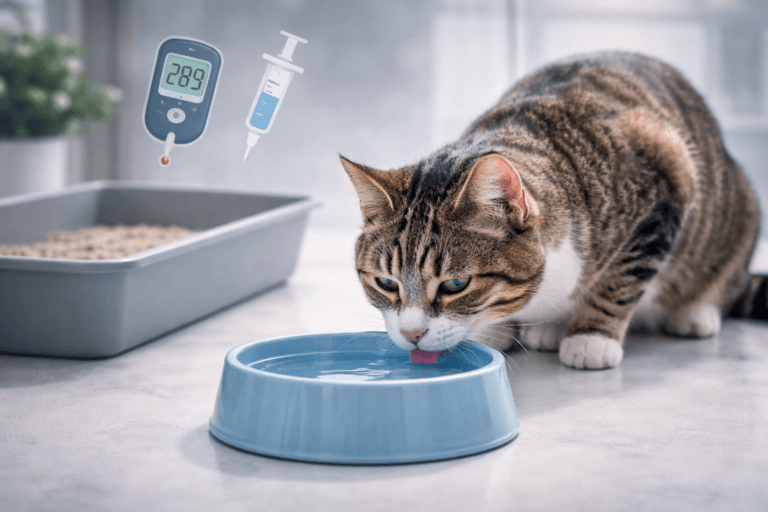
Increased thirst (polydipsia). One of the earliest and most noticeable signs, often paired with increased urination.
Increased urination (polyuria). Dogs may need to go out more frequently, or have accidents indoors despite being house-trained.
Increased appetite with weight loss. A diabetic dog often eats normally or more than usual, yet loses weight because the body cannot properly use glucose for energy.
Lethargy. Reduced energy and enthusiasm for normal activities.
Cloudy eyes. Diabetic cataracts are common in dogs and can develop relatively quickly after diagnosis, sometimes causing noticeable vision changes.
Recurrent infections. Dogs with undiagnosed or poorly controlled dog diabetes are more prone to urinary tract infections and skin infections.
| Stage | Signs | Action needed |
|---|---|---|
| Early/undiagnosed | Increased thirst, urination, appetite, weight loss | Veterinary exam and blood/urine glucose testing |
| Managed | Stable on insulin, normal appetite and energy | Consistent daily insulin, diet, and monitoring |
| Ketoacidosis (emergency) | Vomiting, weakness, rapid breathing, collapse | Immediate emergency veterinary care |
Dog diabetes: How Is Diabetes Diagnosed?
Diagnosis is based on persistently elevated blood glucose along with glucose in the urine, confirmed through bloodwork and a urinalysis. Vets often also run additional tests to check for underlying or contributing conditions, such as pancreatitis or Cushing’s disease, which can complicate diabetes management.
Dog diabetes: What Daily Management Looks Like
Most diabetic dogs are managed with twice-daily insulin injections, given at consistent times alongside meals. Diet plays a major role: a consistent feeding schedule and, often, a specific therapeutic diet help keep blood glucose more stable. Regular veterinary rechecks, including blood glucose curves, help fine-tune the insulin dose over time. Many owners find the daily routine becomes manageable quickly once initial insulin dosing is established, and diabetic dogs can live full, active lives with consistent care.
Dog diabetes: Living Well With a Diabetic Dog
Recognizing Low Blood Sugar (Hypoglycemia)
While much of diabetes management focuses on controlling high blood glucose, insulin treatment also carries a real risk of pushing blood sugar too low, particularly if a dose is miscalculated, a meal is skipped, or unusual exercise burns glucose faster than expected. Early signs of hypoglycemia include unusual weakness, disorientation, or a wobbly, uncoordinated walk. As it progresses, dogs may tremble, appear glassy-eyed, or become unresponsive. If you notice these signs, rubbing a small amount of corn syrup or honey on the gums, if your dog is conscious enough to swallow safely, can help while you arrange immediate veterinary care; a severely unresponsive dog needs emergency treatment right away rather than home intervention. Because hypoglycemia can look similar to other emergencies, keeping a note of insulin timing and recent activity helps your vet quickly identify the likely cause. Preventing hypoglycemia mostly comes down to consistency: feeding and injecting at the same times daily, and not making sudden changes to exercise intensity without adjusting food or discussing it with your veterinarian first.
Diet’s Role in Managing Canine Diabetes
Diet works alongside insulin rather than replacing it, but the right approach meaningfully improves blood glucose stability. Many veterinarians recommend a diet higher in fiber and complex carbohydrates, which slows glucose absorption compared to simple sugars, producing steadier blood levels after meals. Consistency matters as much as the specific food: feeding the same type and amount of food at the same times each day, ideally aligned with insulin injections, avoids the blood sugar swings that come from irregular meals. Treats and table scraps should be chosen carefully and kept minimal, since unplanned extra calories or sugar can undo careful insulin dosing. Weight management is closely tied to dog diabetes control as well; both significant weight loss and weight gain can change how much insulin a dog needs, so unplanned weight changes are worth discussing at a checkup rather than adjusting food independently. Your veterinarian can recommend a specific therapeutic diet if general dietary consistency alone isn’t achieving stable control.
The Real Cost and Time Commitment
Being upfront about what managing a diabetic dog actually involves day to day helps owners plan realistically rather than being caught off guard after diagnosis. Twice-daily insulin injections at consistent times mean structuring a household routine around those windows, which for most owners becomes second nature within a few weeks but does represent a genuine, ongoing commitment rather than a temporary adjustment. Costs include the insulin itself, syringes, a therapeutic diet if recommended, and periodic veterinary rechecks with bloodwork, typically more frequent in the first few months while the correct dose is being established, then less frequent once stable. Many owners find pet insurance, if already in place before diagnosis, meaningfully offsets these ongoing costs, though pre-existing condition exclusions mean insurance obtained after a diabetes diagnosis typically won’t cover it. Boarding and travel require extra planning too, since a pet sitter or boarding facility needs clear instructions and confidence administering insulin, or a dog may need to stay with a veterinary hospital during an owner’s absence. None of this makes diabetes management impractical, most owners adapt well within the first month, but going in with realistic expectations about the routine, rather than assuming daily management will feel effortless immediately, sets up a smoother transition for both owner and dog.
Why Blood Glucose Curves Matter
A blood glucose curve, a series of blood glucose measurements taken over several hours after an insulin dose, is one of the key tools veterinarians use to fine-tune a diabetic dog’s treatment, and understanding what it shows helps owners appreciate why it’s requested periodically. A single blood glucose reading only captures one moment in time, but diabetes management is really about the whole pattern across the day, how high glucose rises after eating, how low it drops at the insulin’s peak effect, and how long the insulin’s effect lasts before the next dose. A curve showing glucose dropping too low at any point signals a dose reduction is needed, while one showing persistently high values throughout suggests the dose may need to increase. Some veterinary practices offer in-hospital curves over a full day, while others train owners to perform simplified home monitoring using a glucometer, which can reduce the stress of hospital visits for both dog and owner while still providing useful data. Whichever method your veterinarian recommends, understanding that curves are a normal, expected part of diabetes management, not a sign something has gone wrong, helps set realistic expectations for the ongoing monitoring this condition requires.
Traveling and Boarding With a Diabetic Dog
Planning ahead for travel or boarding matters more with a diabetic dog than a typical pet, since insulin timing needs to stay consistent even away from home. Bringing a written schedule, enough insulin and supplies with a buffer for delays, and confirming any boarding facility or pet sitter is genuinely comfortable administering injections before you leave prevents a stressful situation from becoming a medical one during your absence.
A Final Word of Encouragement
A diabetes diagnosis often feels overwhelming in the first days, but most owners find the daily routine becomes second nature within a few weeks, and the dog on the other end of that routine typically feels noticeably better once blood glucose is under control than they did in the undiagnosed period beforehand.
Diabetes, Pancreatitis, and Diet Overlap
Diabetes and pancreatitis share a meaningful clinical connection: pancreatitis can damage insulin-producing tissue and contribute to diabetes developing, while diabetic dogs may face somewhat elevated pancreatitis risk too. This overlap is part of why the low-fat, consistent dietary approach recommended for pancreatitis often complements diabetes management well, rather than the two conditions requiring conflicting dietary strategies.
Frequently Asked Questions
Can dogs live a normal life with diabetes?
Yes, with consistent insulin treatment, diet and monitoring, many diabetic dogs live full, active lives for years after diagnosis.
Is dog diabetes the same as human diabetes?
Canine diabetes is broadly similar to human Type 1 diabetes, where the body doesn’t produce enough insulin, and is generally managed with insulin injections rather than oral medication alone.
Can diet alone manage diabetes in dogs?
No. Diet is an important supportive part of management, but the large majority of diabetic dogs require insulin injections; diet alone is not considered sufficient treatment.
What happens if diabetes in dogs goes untreated?
Untreated dog diabetes can progress to diabetic ketoacidosis, a life-threatening complication, along with cataracts, chronic infections and significant weight loss.
What are the signs of low blood sugar in a diabetic dog?
Weakness, disorientation, trembling, or an uncoordinated walk can indicate hypoglycemia, and severe cases may involve unresponsiveness, requiring immediate veterinary attention.
Can a diabetic dog’s insulin needs change over time?
Yes, insulin requirements can shift with weight changes, activity level, illness, or aging, which is why regular veterinary rechecks and glucose curves remain important even after initial stabilization.
By Dr. Zahid Afzal, DVM — General Veterinary Hospital, Lahore. This article is for general education and does not replace a full physical examination, blood testing or personalized insulin plan from your own veterinarian. If your diabetic dog is vomiting or weak, seek emergency care immediately.




4 Comments