
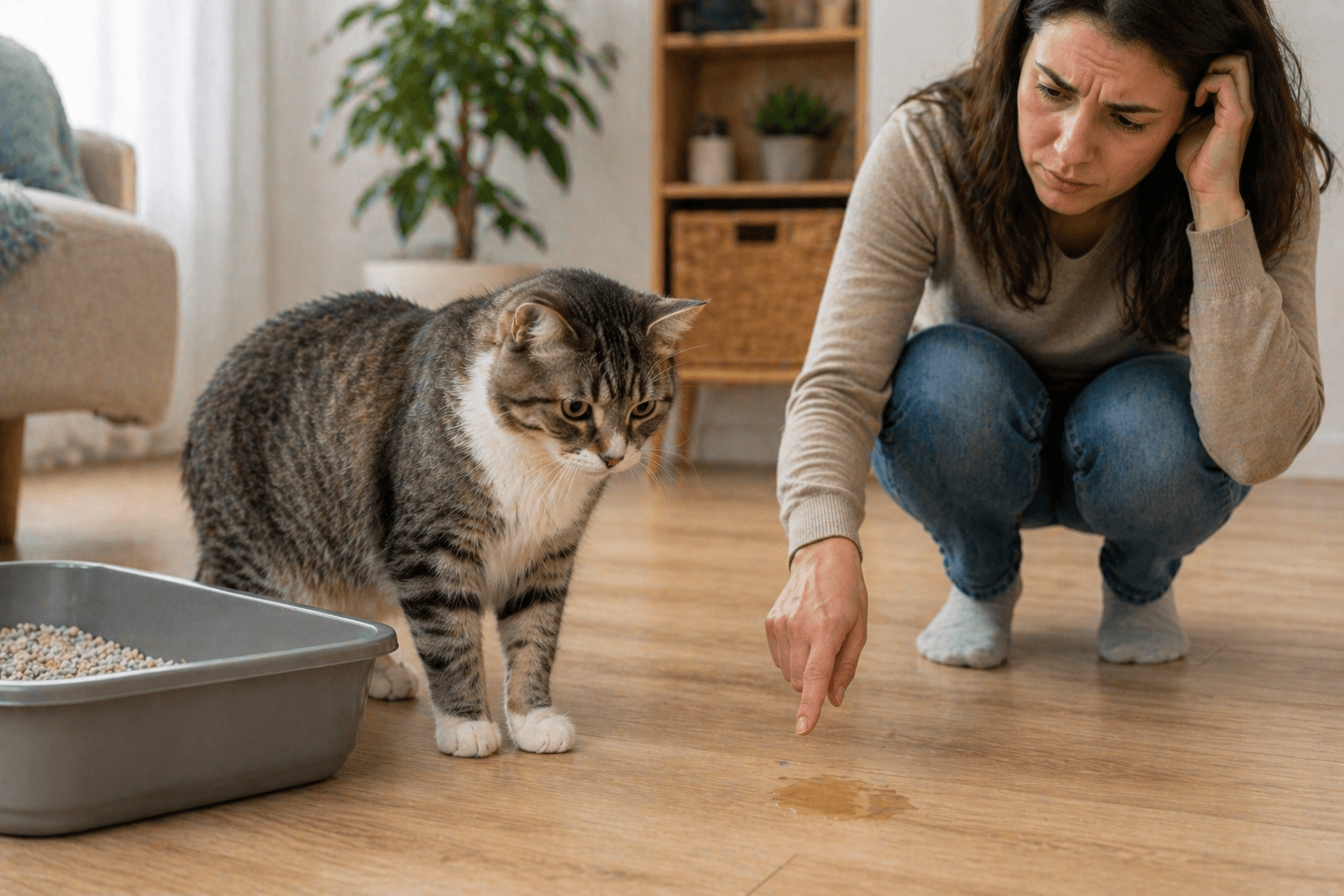
Cat peeing outside the litter box is one of the most frustrating and worrying problems cat owners face. Cat peeing outside the litter box can start suddenly in a cat that was previously clean for years, or it can build up slowly with small warning signs that get missed at first. In many homes, cat peeing outside the litter box is not a behavior problem alone. It is often the cat’s way of showing pain, fear, stress, urinary discomfort, or dislike of something about the litter setup. That is why punishment never helps and why the real cause must be found.
At General Veterinary Hospital Lahore, we see this problem regularly. Some owners arrive feeling embarrassed, thinking their cat has become “stubborn” or “dirty.” But in real practice, many of these cats are actually dealing with bladder pain, urinary inflammation, constipation, diabetes, kidney disease, arthritis, or stress in the home. Sometimes the box is dirty, badly placed, too small, or shared with too many other cats. Sometimes the medical issue and the stress issue exist together.
One owner may notice urine on the bed. Another finds small puddles near doors, on prayer mats, or beside the litter tray. Some cats squat and pass a full amount of urine in a quiet corner. Others keep making frequent tiny trips with only drops coming out. These details matter because they help separate true litter-box avoidance from spraying, territorial marking, or urinary emergencies.
This guide explains the most common causes of cat peeing outside the litter box, how to tell when it is medical, what home factors often trigger it, what you can do safely, and when your cat needs urgent veterinary care.
Is peeing outside the litter box ever normal?
No, not really. It may be common, but it is not normal. A healthy, comfortable cat with a suitable litter setup usually wants to use the litter box. If that changes, owners should assume there is a reason.
| Pattern | What It May Mean |
|---|---|
| Squatting and passing normal urine on floor, bed, or corner | Pain, litter-box aversion, stress, medical problem |
| Standing with tail up, spraying small amounts on walls or doors | Marking behavior is more likely |
| Frequent trips with very little urine | Urinary pain, inflammation, or blockage concern |
| Avoiding the tray after difficulty climbing in | Arthritis, box design problem, pain |
The biggest mistake owners make
The biggest mistake is assuming the cat is acting out. Cats do not urinate outside the litter box to “take revenge.” In most cases, they are trying to solve a problem from their point of view. The box may hurt to use, feel unsafe, smell bad, be hard to access, be guarded by another cat, or remind them of pain from a previous urination episode.
Common medical causes of cat peeing outside the litter box
- Feline lower urinary tract disease
- Urinary tract inflammation or pain
- Urinary blockage in male cats
- Diabetes
- Kidney disease
- Constipation
- Arthritis or mobility pain
- Bladder stones or crystals
- Less commonly, neurological problems or cognitive decline
1. Painful urination and bladder inflammation
One of the most common reasons for cat peeing outside the litter box is pain during urination. If a cat associates the litter tray with discomfort, the cat may start using other places instead. The owner sees the wrong location, but the real issue is the pain.
At General Veterinary Hospital Lahore, this is one of the most frequent patterns we see. A cat starts visiting the tray repeatedly, cries softly, urinates a few drops, then begins passing urine on smooth floors, beds, or nearby corners. The family thinks the cat is confused, but the cat is actually trying to avoid the place linked with pain.
Medical clues include:
- Frequent small urinations
- Straining
- Crying in the box
- Blood in urine
- Licking the genital area
- Restlessness around the tray
This topic connects naturally with your existing article on urinary blockage in cats.
2. Urinary blockage in male cats
This is an absolute emergency. A blocked cat may keep going to the tray, strain repeatedly, pass little or no urine, cry, hide, vomit, or become weak. Owners sometimes think the cat is constipated or behaving oddly, when the real problem is life-threatening urinary obstruction.
At General Veterinary Hospital Lahore, blocked male cats are often first brought in with the complaint that they are peeing outside the litter box or visiting it constantly. By the time the owner notices the seriousness, the cat may already be in critical condition.
3. Diabetes and kidney disease
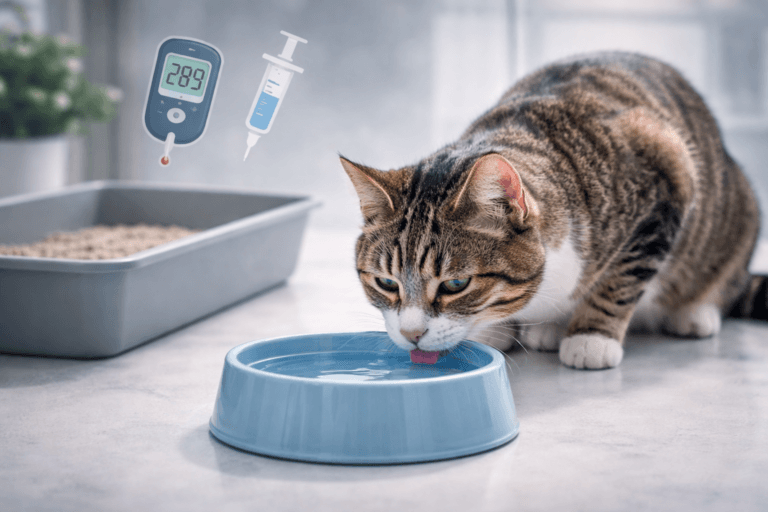
Some cats start peeing outside the litter box because they are producing much more urine than usual. Diabetes and kidney disease both make cats drink more and urinate more. The cat may not reach the tray in time, may start using multiple spots, or may choose easier locations because the urge feels more urgent.
Owners may also notice:
- Drinking more water
- Larger urine clumps
- Weight loss
- Increased or decreased appetite
- Weakness or dullness
In older cats, this pattern is common. A family may think the problem is “only behavioral,” but blood and urine testing reveal that the cat is producing unusually high amounts of urine because of internal disease. Your existing articles on diabetes in cats and cat kidney disease fit very well here.
4. Constipation
Constipation can also cause cat peeing outside the litter box, especially when the cat starts associating the tray with straining and discomfort. Some constipated cats avoid the tray completely. Others go in, strain, come out, then squat elsewhere.
At General Veterinary Hospital Lahore, this is especially common in older, overweight, dehydrated, or low-activity cats. Owners sometimes focus only on the urine accidents and miss that the cat has also been passing smaller, drier stools or going less often.
Your article on constipation in cats is a natural internal link for this section.
5. Arthritis and mobility problems
Senior cats may stop using the litter box simply because getting in and out hurts. A high-sided tray, awkward corner placement, or a slippery floor near the box may be enough to make an arthritic cat choose an easier nearby spot.
This is an often-overlooked cause. The cat is not forgetting the tray. The cat is avoiding pain. Low-sided trays or easy-entry boxes can make a major difference in some households.
Behavioral and environmental causes
Not every case of cat peeing outside the litter box is caused by disease alone. Many cases are related to the litter setup, the home environment, or stress. Sometimes a medical problem starts the issue, then the behavior continues because the tray now feels unpleasant.
1. Dirty litter box
Some cats are very particular. A box that smells too strong, has old clumps, or is cleaned unpredictably may be rejected.
2. Wrong litter type
Cats can dislike a new texture, scented litter, dusty litter, or sudden change in litter brand. Fine, unscented litter is often better accepted.
3. Poor box location
A litter box near washing machines, noisy doors, food bowls, busy hallways, or areas where the cat feels trapped may be avoided.
4. Too few boxes
In multi-cat homes, there may simply not be enough trays. One bullied cat may avoid a shared tray altogether.
5. Stress and household changes
New pets, guests, babies, furniture movement, conflict between cats, renovations, changes in routine, or seeing outdoor cats through windows can all contribute.
At General Veterinary Hospital Lahore, some of the most frustrating cases are not purely medical or purely behavioral. A cat may begin urinating outside the litter box after one painful urinary episode, then continue because a new cat has also made the tray area stressful. These mixed cases are common in real life.
Peeing outside the box vs spraying
This difference matters because the approach can be different.
| Feature | Peeing Outside the Box | Spraying |
|---|---|---|
| Body position | Squatting | Standing, tail up |
| Amount of urine | Often a normal amount | Usually small amount |
| Surface | Floor, bed, laundry, mat | Vertical surfaces like doors or walls |
| Common cause | Pain, tray aversion, illness | Marking, stress, territory |
What you can check at home
If your cat is stable, you can gather helpful clues before the vet visit:
- Watch whether your cat squats or sprays
- Notice how much urine is coming out
- Check for straining or crying
- Look for blood in urine
- Count how many litter trays are available
- Think about recent litter, box, or household changes
- Watch how much water your cat is drinking
- Check whether stool pattern has changed too
A short video of the behavior can be very useful for the veterinarian, especially when the main question is whether the cat is peeing, spraying, or straining repeatedly.
What not to do
- Do not punish your cat
- Do not rub the cat’s nose in urine
- Do not keep changing multiple things at once
- Do not assume it is “just behavior”
- Do not delay if straining is present
Punishment often makes the problem worse. It increases fear and stress and may make the cat hide urination behavior rather than solve it.
When your cat needs urgent veterinary care
Cat peeing outside the litter box becomes urgent when it is associated with:
- Frequent straining
- Passing only drops
- No urine produced
- Crying in the litter box
- Vomiting
- Severe lethargy
- Blood in the urine
- Painful belly
At General Veterinary Hospital Lahore, one memorable male cat was brought in because he had “started peeing on the prayer mat.” On questioning, the cat had also been visiting the tray again and again and only passing a few drops. The real problem was not bad behavior. It was a urinary emergency. Early treatment made the difference.
How veterinarians diagnose the cause
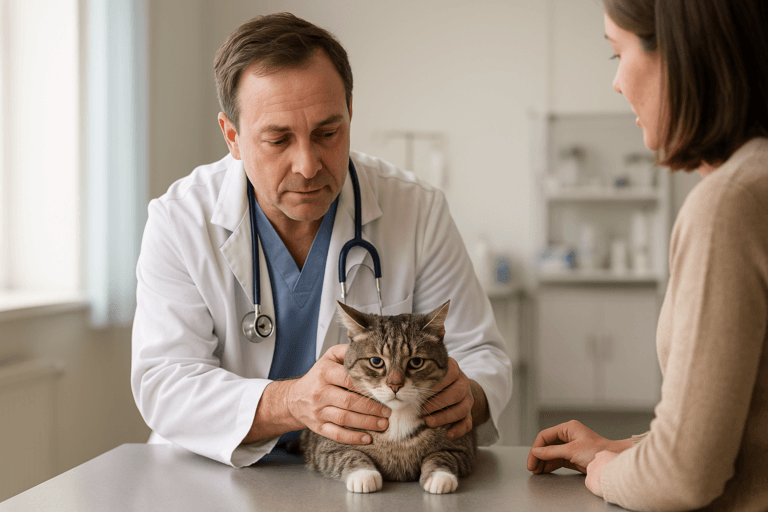
The first step is usually to rule out medical disease. Diagnosis may include history, physical examination, abdominal palpation, urine testing, and sometimes blood work or imaging. The veterinarian may also ask detailed questions about litter type, tray location, other pets, stress, and changes in the home.
This matters because several very different problems can look the same at home. A cat with bladder inflammation, a cat with diabetes, and a cat stressed by a new pet may all end up urinating outside the box, but the treatment is very different.
How cat peeing outside the litter box is treated
Treatment always depends on the real cause.
Urinary pain or inflammation
The cat may need pain relief, urinary support, diet changes, and close monitoring.
Urinary blockage
This is an emergency and needs immediate veterinary treatment.
Diabetes or kidney disease
The internal disease must be diagnosed and managed directly.
Constipation
Hydration, stool management, diet support, and treatment of the cause are important.
Arthritis or mobility issues
Low-entry trays, easy access, and pain management may help greatly.
Litter-box aversion or stress
The solution may include cleaner trays, more trays, better locations, unscented litter, conflict reduction, and environmental improvement.
Simple litter-box setup checklist
- At least one litter tray per cat, plus one extra if possible
- Quiet location away from food and water
- Easy access with no bullying from other pets
- Unscented litter if possible
- Regular scooping and cleaning
- Low-sided tray for senior or painful cats
Frequently asked questions
Why is my cat peeing on the bed?
This can happen with stress, pain, urinary disease, or litter-box aversion. Beds also hold strong owner scent, which can be appealing to a stressed cat.
Why is my cat peeing right beside the litter box?
This often suggests the cat wants to use the tray but something about the tray is painful, unpleasant, dirty, scary, or difficult.
Can stress alone cause cat peeing outside the litter box?
Yes, but medical causes must be ruled out first because pain and stress often overlap.
Is spraying the same as peeing outside the box?
No. Spraying is usually a smaller amount on a vertical surface, while inappropriate toileting is usually squatting and passing urine on a horizontal surface.
Final thoughts
Cat peeing outside the litter box is never something owners should dismiss. Sometimes cat peeing outside the litter box is linked to stress or litter-box setup, but very often it is connected to pain, urinary disease, constipation, diabetes, kidney disease, or mobility problems. The earlier the reason is identified, the easier it is to protect your home and your cat’s health at the same time.
At General Veterinary Hospital Lahore, we often remind owners that the urine spot is not the real problem. It is the clue. Once the cause is found, many cats improve much faster than families expect. If your cat is straining, crying, passing only drops, or suddenly changing toilet habits, arrange a veterinary visit without delay.



This article really highlights how important it is to look beyond simple behavioral assumptions when a cat starts peeing outside the litter box. As someone who’s dealt with this issue before, I can confirm that sudden changes often point to underlying health problems like urinary tract infections or stress, which is exactly what the post emphasizes. It’s a helpful reminder that patience and a vet visit are usually the best first steps.
I really appreciate how you emphasized that this isn’t just a behavioral issue but often a sign of underlying health or stress problems. It’s easy for owners to overlook subtle changes like litter box cleanliness or environmental stressors, especially in multi-pet homes. Catching those early warning signs can make a big difference in both the cat’s comfort and preventing more serious conditions.