

Quick navigation
1. Early signs of ear mites and cat ear infection
Many cats hide discomfort very well. If you’ve read our guide on subtle signs that cats are hiding pain, you know that they often stay quiet even when something is seriously wrong. Ear disease is no exception.Common symptoms you may notice at home
- Frequent head shaking or tilting the head to one side
- Scratching or pawing at one or both ears
- Red, swollen, or warm ear flap (pinna)
- Brown, black, yellow, or bloody discharge inside the ear canal
- Bad smell from the ears
- Cat becomes irritable when you touch the head or ears
- Loss of balance, falling, or walking in circles (more serious)
- Reduced appetite or general lethargy
2. Ear mites vs yeast vs bacterial cat ear infection
“Ear infection” is a broad term. In real life at the veterinary clinic we see three main categories:2.1 Ear mites (Otodectes cynotis)
Ear mites are tiny parasites that live on the surface of the ear canal and feed on tissue fluid and wax. They are extremely itchy, especially in kittens and outdoor cats. Typical signs include:- Intense scratching, often with back feet
- Dark brown, crumbly discharge that looks like coffee grounds
- Both ears usually affected, though one side can be worse
- Cats may scratch the skin around the neck and cheeks as well
2.2 Yeast cat ear infection
Yeast (most commonly Malassezia) love warm, moist environments. We see yeast ear infections more often in cats with underlying allergies, chronic skin disease or other medical conditions such as feline viral infections or long-term medication use.Typical signs include:- Thick, waxy discharge that may be brown, yellow or grey
- Strong, “yeasty” or cheesy odour
- Red, inflamed ear canal that may be painful to touch
- Often starts in one ear and then spreads to the other
2.3 Bacterial cat ear infection
Bacteria can be primary (the main cause) or secondary (taking advantage of damage already caused by mites or yeast). These infections are usually more painful and can become very deep, affecting the middle or inner ear.Signs that make us suspicious of a bacterial infection include:- Thick yellow, green, or bloody discharge
- Very bad smell from the ears
- Cat cries or bites when the ear is touched
- Head tilt, loss of balance, rapid eye movements (nystagmus)
- Fever, lethargy or reduced appetite
Never guess the cause just by looking. Yeast, bacteria and mites often occur together. The exact treatment your cat needs depends on what we see under the microscope when we test the ear debris.
3. Why do cats get ear infections?
A healthy cat ear is self-cleaning. Wax slowly moves outwards and falls away. Anything that disrupts this balance can create the perfect environment for mites, yeast or bacteria.Common risk factors we see at General Veterinary Hospital, Lahore
- Ear mites (especially in kittens, outdoor cats and shelter rescues)
- Underlying allergies – food, flea allergy or environmental allergies
- Moisture in the ear after frequent bathing
- Trauma from cotton buds or aggressive cleaning
- Polyps or growths in the ear canal
- Systemic illnesses that weaken immunity, such as pancreatitis, FIP or chronic viral infections
- Poor nutrition – low-quality diets can worsen skin and ear health; see our complete cat nutrition guide
- Long-term use of some medications (for example steroids) without monitoring
4. How your vet diagnoses a cat ear infection
At first glance many ear problems look similar, even to an experienced vet. That’s why we use a structured approach at General Veterinary Hospital, Lahore.4.1 History & physical exam
We begin by asking questions: How long has the problem been present? Is your cat an indoor or outdoor cat? Have you noticed any diarrhoea, vomiting or changes in thirst that might point to wider disease? (For example, cats with ongoing digestive issues may also suffer from urinary blockage or other internal problems.)4.2 Otoscopic examination
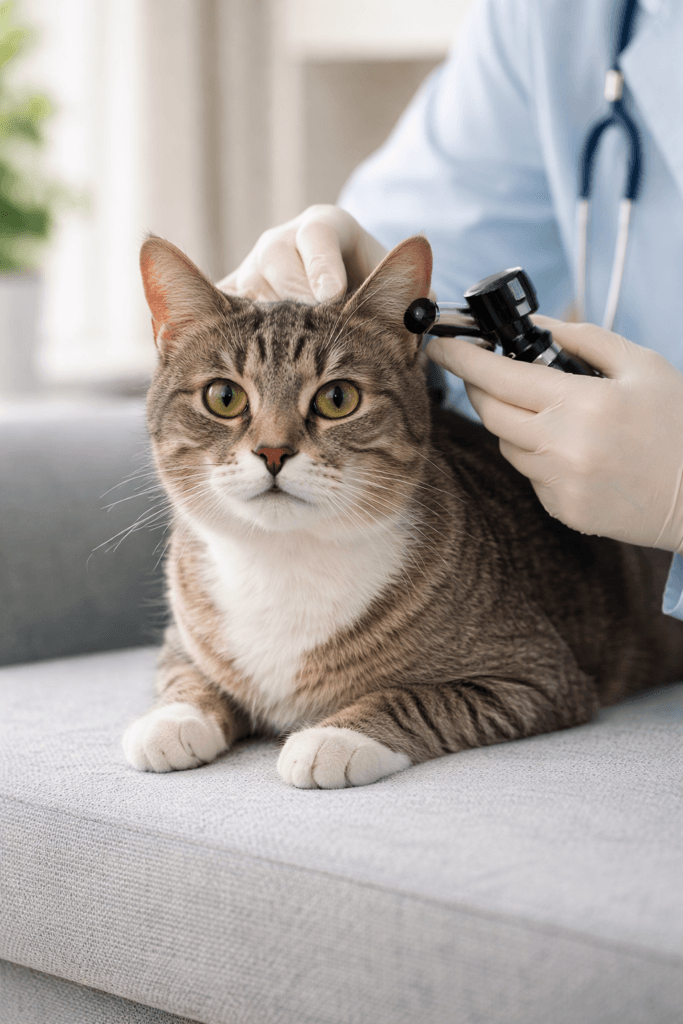
An otoscope is a special instrument that lets us look deep into the ear canal and check the ear drum. We look for:- Amount and character of ear discharge
- Redness, swelling, or thickening of the canal walls
- Foreign bodies such as seeds or grass awns
- Polyps, growths or suspected tumours
- Condition of the ear drum (intact, bulging, ruptured)
4.3 Cytology – the microscopic test that guides treatment
Using a cotton swab, we collect a small sample of debris from the ear and stain it on a glass slide. Under the microscope we can clearly see:- Ear mites (moving parasites and their eggs)
- Yeast cells
- Cocci or rod-shaped bacteria
- Inflammatory cells such as neutrophils or eosinophils
4.4 Additional tests when needed
If we suspect a deeper problem or whole-body disease, we may recommend blood tests, allergy testing, X-rays or CT scan, or an investigation for hormonal or digestive disease (our guides on diarrhoea and pancreatitis in cats explain why these conditions often connect).5. Treatment for cat ear infection & ear mites
Important: The information below is for education. Never start ear medication without a vet exam, especially if your cat seems very painful or off-balance. Some medicines can cause permanent hearing loss if the ear drum is ruptured.
5.1 In-clinic treatment
At the clinic we usually start with:- Gentle ear cleaning using a veterinary ear cleaner to remove pus, wax and mite debris.
- Pain relief – many cats feel much happier after a small injection of anti-inflammatory medicine.
- Topical ear drops that may contain:
- A parasiticide (to kill ear mites)
- An antifungal (for yeast)
- An antibiotic (for bacteria)
- A mild steroid (to calm inflammation and itching)
- Systemic treatment – tablets or injections if the infection is severe, very painful, or extends beyond the ear.
5.2 At-home treatment plan
Once your cat has been assessed, we design a clear home-care plan. It usually includes:- Cleaning the ears once or several times per week with a recommended solution.
- Applying ear drops for a set number of days or weeks.
- Using parasite control for all cats and dogs in the household if ear mites are present.
- Returning for a re-check visit to confirm that the infection is fully cleared.
5.3 Treating ear mites correctly
When ear mites are confirmed, we usually combine two strategies:- Topical ear drops that kill mites in the ears.
- Spot-on parasite control applied to the skin on the back of the neck, which kills mites across the body.
- Treat all in-contact animals, even if they have no symptoms yet.
- Wash bedding and vacuum the home to remove eggs and debris.
6. How to clean your cat’s ears safely (step-by-step)
Proper cleaning is one of the most important parts of treating a cat ear infection. Here is the method we teach guardians at General Veterinary Hospital, Lahore.- Choose a calm time. Pick a quiet room and a time when your cat is relaxed, not just after play.
- Gather your supplies. Vet-recommended ear cleaner, cotton pads or soft gauze, prescribed ear drops, and a towel or blanket.
- Wrap your cat gently. If needed, wrap your cat in a towel like a “purrito” to protect your arms while keeping the head free.
- Fill the ear canal with cleaner. Gently hold the ear flap upright, insert the tip of the bottle only a little way, and squeeze until you see the canal fill. Avoid touching the tip to the skin if you can.
- Massage the base of the ear. Use your thumb and fingers to massage the base for 20–30 seconds. You should hear a squishing sound as the cleaner loosens wax and debris.
- Let your cat shake. Step back and allow your cat to shake its head – this helps bring debris to the surface.
- Wipe away debris. Use cotton pads or soft gauze to gently wipe the inside of the ear flap and the visible part of the canal. Do not push cotton buds deep into the ear; they can damage the drum.
- Apply ear drops. Once the canal is clean, place the prescribed number of drops, massage again, and reward your cat with praise or a treat.
- Repeat as directed. Most cats need cleaning once or twice per day during the acute phase, then less often for maintenance.
7. Preventing future cat ear infections
Once a cat has had one ear infection, they are more likely to get another, especially if the underlying cause is not addressed. Here are strategies we commonly recommend.7.1 Regular checks at home
- Gently look into your cat’s ears once a week while they are relaxed.
- Watch for any redness, new odour, or discharge.
- Note any changes in behaviour such as head shaking or scratching.
7.2 Routine vet visits
Annual or twice-yearly health checks help us catch issues early – not just ear disease, but also problems like urinary blockage, digestive disease and dental problems. Keep your cat up to date on vaccines as outlined in our cat vaccination schedule guide .7.3 Parasite control
Use vet-recommended parasite control products all year round, especially if your cat goes outdoors or lives with dogs. This not only prevents ear mites but also protects against fleas, ticks and other parasites that can trigger skin and ear inflammation.7.4 Good nutrition & overall health
A balanced diet with high-quality protein, essential fatty acids and adequate vitamins and minerals keeps the skin and ears resilient. For guidance, see our complete cat nutrition guide (2025 edition) . Cats with chronic digestive or systemic illnesses such as pancreatitis or FIP may need special diets and closer monitoring.7.5 Avoid over-cleaning
A gentle clean once in a while is helpful, but daily aggressive cleaning can inflame the ear canal and actually increase the risk of a cat ear infection. If your cat’s ears look normal (pale pink, almost no odour, little wax), you usually do not need to clean them frequently.8. Special situations: kittens, senior cats and chronic infections
8.1 Kittens with ear mites
Many rescued or adopted kittens arrive with heavy mite infestations. Because their immune systems are still developing, they can quickly develop secondary bacterial or yeast cat ear infection on top of the mites. Early treatment, proper parasite control and good nutrition are essential.8.2 Senior cats
Older cats are more prone to systemic illnesses such as kidney disease, cancer and endocrine disorders. When a senior cat develops recurrent ear problems, we look more carefully for hidden disease and strongly recommend routine blood tests and full physical examination.8.3 Chronic or recurrent ear disease
Some cats deal with ear problems for months or years. In these cases we think beyond simple infection and ask:- Is there an underlying allergy or food intolerance?
- Could there be a growth or polyp in the ear canal or middle ear?
- Is the medication being used long enough and in the correct way?
- Are other body systems involved – for example the digestive tract or urinary tract?
9. Frequently asked questions about cat ear infection
Q1. Can a cat ear infection go away on its own?
Very mild irritation might improve with time, but true infections rarely disappear completely without treatment. Even if the signs seem to settle, yeast or bacteria can remain deep in the canal and flare up later. It’s always safer to have your vet examine the ear.Q2. Is cat ear infection contagious to other pets or people?
Ear mites are contagious to other cats and dogs, so we usually treat all animals in the household. Bacterial and yeast infections themselves are usually not directly contagious, but the underlying causes (such as allergies or viral disease) may affect more than one animal in the home.Q3. How long does treatment take?
Simple ear mite cases may improve within a week, though we often treat for 2–4 weeks to be safe. Yeast and bacterial infections can take several weeks, and deep middle-ear infections may need months of therapy and repeated re-checks.Q4. Can I use over-the-counter dog ear drops for my cat?
Please don’t. Some ingredients that are safe for dogs are irritating or toxic for cats. Others are unsafe if the ear drum is ruptured. Always use medicine specifically prescribed for your cat after an ear exam.Q5. When is a cat ear infection an emergency?
Seek urgent veterinary care if you notice:- Sudden head tilt or loss of balance
- Rapid eye movements (nystagmus)
- Severe swelling around the ear or bleeding
- Cat is very lethargic, not eating, or crying constantly
- Any signs of poisoning along with ear symptoms – review our cat poisoning emergency guide
Published Research: Antibiotic Resistance in Feline Ear Infections
Our clinical team’s peer-reviewed study reviewed 200 feline bacterial infection cases at our own hospital and found Pseudomonas aeruginosa was the leading organism in ear infections, with high resistance to several common first-line antibiotics, another reason a proper vet exam and culture matter before starting treatment.
Afzal, Z., Hina, I., Aziz, M.T., Yaqub, T., Baig, I. and Rafaqat, F. (2026) ‘Antimicrobial Resistance Patterns of Bacterial Isolates from Feline Clinical Infections in a Private Veterinary Practice in Lahore, Pakistan’, Bioscience Insights, 3(1), pp. 234–246.






6 Comments